
Best Order Management System for B2B E-commerce
Efficient order management is one of the biggest drivers of growth for B2B e-commerce brands. Nearly 80% of companies say their order process could be improved. As buyers demand a more seamless order process, they want to place self-service orders online and order through sales reps with less friction. For these reasons, choosing the right Order Management System (OMS) becomes essential.
This guide compares the best order management systems for B2B e-commerce, comparing features, benefits, strengths, weaknesses, and associated costs, so you can choose the platform that fits your workflow, sales model, and scale.
What to Look for in a B2B Order Management System
A strong B2B-focused order management system should support workflows that are very different from traditional B2C e-commerce. When evaluating providers, prioritize tools that offer:
Multi-channel order intake: online store, sales reps, and customer service.
Fast onboarding: onboard new sales reps, new customers, and place orders on-the-go.
Automated workflows: routing, approvals, back-orders, and split shipments.
Custom visibility controls: allow reps to see only their customers, orders, and commissions.
Sales rep tools: field ordering, territory mapping, and automated commissions.
Integrations: e-commerce platform, ERP, CRM, and shipping carriers.
Scalability: support everything from startups to enterprises.
Implementation & support: onboarding, training, and ongoing support quality.
With that in mind, here are the top order management system options for B2B brands today.
B2B Order Management Systems, Compared
Velocity (MedShift)
Best for B2B E-Commerce: B2B brands using Shopify or BigCommerce with field reps & territories.
Key Strengths: Native Shopify app and BigCommerce plugin; territory mapping down to ZIP; automated commission payouts; dedicated rep portal for mobile ordering with controlled visibility; supports complex hierarchies and territory overrides.
Indicative Starting Price*: From ~$499/mo on Shopify or BigCommerce (Starter plan, up to 5 mapped reps; higher tiers for more reps & geos).
Good fit if you… run on Shopify or BigCommerce. Rely on sales reps to drive orders. Want rep ordering and commissions in one system. Need to automate manual steps from order placement to fulfillment.
Pepperi
Best for B2B E-Commerce: Omnichannel B2B brands (field reps + wholesale portal)
Key Strengths: Unified B2B commerce platform combining sales force automation, B2B e-commerce, retail execution, and route accounting in one system; strong mobile experience.
Indicative Starting Price*: Public listings show from ~$500/mo; some sources quote per-user from ~$48/user/month depending on plan and volume.
Good fit if you… have a sizable catalog, a rep team, and want a single platform to manage self-serve wholesale orders plus in-person sales activity.
SparkLayer
Best for B2B E-Commerce: B2B/wholesale brands running on Shopify
Key Strengths: Adds a B2B layer on top of your existing Shopify store; supports company-specific pricing, B2B payments/terms, MOQs, packs, and sales agents; quick to deploy.
Indicative Starting Price*: From $49/mo (Starter), then $149/mo (Growth), $299/mo (Pro), Enterprise from $499/mo; limits based on B2B orders and agents.
Good fit if you… already use Shopify, want to keep your existing site, and need to turn it into a B2B storefront with custom pricing and quick B2B checkout.
Finale Inventory
Best for B2B E-Commerce: Product-heavy e-commerce & wholesale needing strong inventory + OMS
Key Strengths: Centralized multi-channel inventory; purchase and sales order management; multi-location support; good for high SKU counts and multi-channel stock sync.
Indicative Starting Price*: Entry “Self-Starter” plan around $99/mo for 1 user & up to 500 orders/month; higher tiers scale by users, order volume & integrations.
Good fit if you… sell across multiple channels or warehouses, and inventory accuracy and purchase/sales order control are your main pain points.
Fluent Order Management (Fluent Commerce)
Best for B2B E-Commerce: Large/enterprise B2B & omnichannel operations
Key Strengths: Cloud-native distributed OMS; handles complex B2B orders (hundreds/thousands of lines), component products, and multi-market routing; microservices architecture and strong API layer.
Indicative Starting Price*: Enterprise, quote-based. AWS listings show multi-year contracts (e.g., ~$300k over 36 months, depending on volume & update velocity).
Good fit if you… are an enterprise with complex supply chains, multiple ERPs/channels, and need a highly configurable OMS as a central “orchestration” layer.
Skynamo
Best for B2B E-Commerce: Manufacturers & distributors with heavy field-sales activity
Key Strengths: All-in-one field sales platform: route planning, customer visit tracking, mobile order capture, real-time sales visibility, and territory management.
Indicative Starting Price*: Pricing often from ~$39/user/mo, with final pricing based on users, integrations, and features; typically quote-based beyond entry references.
Good fit if you… have reps who place most orders in the field, you need better visibility into visits & pipelines, and want CRM + order capture in one mobile app.
B2B Wave
Best for B2B E-Commerce: SMB wholesalers launching a simple B2B portal
Key Strengths: Cloud B2B e-commerce platform with online catalogs, price lists, customer groups, sales-rep management and basic order management; integrates with accounting and inventory tools.
Indicative Starting Price*: Contact vendor for pricing. Marketed as “affordable cost”; offers 14-day free trial and tiered plans for SMB wholesalers.
Good fit if you… want to get a wholesale portal live quickly, keep complexity low, and plug into existing accounting/inventory systems without a full ERP.
NuORDER (Lightspeed)
Best for B2B E-Commerce: Fashion / lifestyle brands selling wholesale to retailers
Key Strengths: Global B2B wholesale platform with digital showrooms, assortments, virtual catalogs, and collaborative order workflows; focuses on brands–retailers relationships.
Indicative Starting Price*: Third-party comparisons indicate pricing from ~US$7,000/year, scaling with users and implementations; generally quote-based for serious wholesale programs.
*Pricing is indicative and may change; most vendors offer tiered/quote-based plans that vary with users, order volume, channels, and add-ons.
Field-Sales-Focused B2B Order Management Systems
These platforms are ideal if you sell through reps, distributors, and outside sales teams who need a strong mobile ordering experience plus back-office automation.
Velocity – Best All-Around OMS for B2B Teams With Sales Reps
Overview
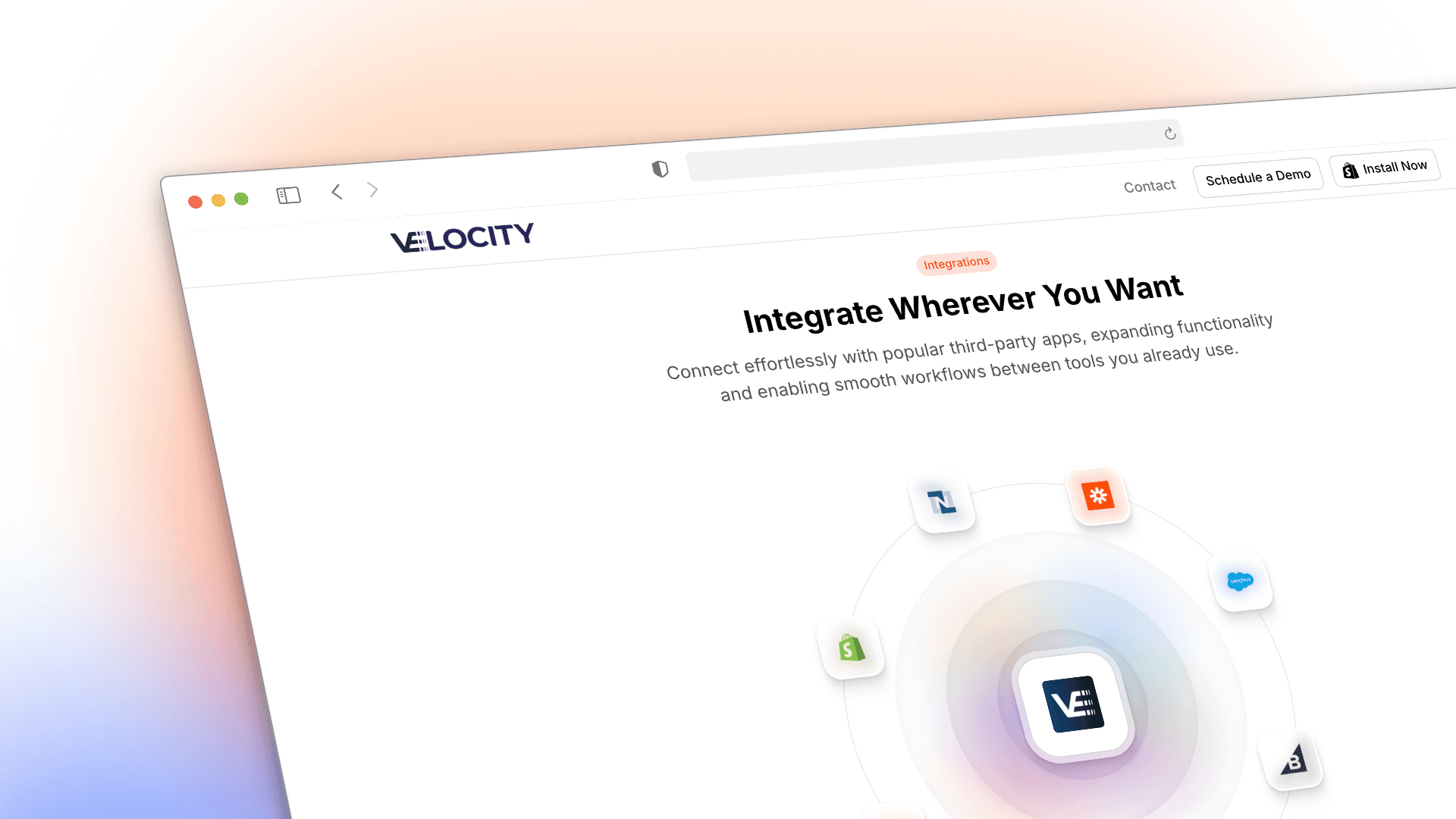
Velocity is a standalone platform, Shopify App, and BigCommerce plugin built to replace fragmented tools for field sales, onboarding, order operations, and commissions, positioning itself as an end-to-end ordering engine for B2B sellers.
Key Features
Sales rep portal with mobile ordering built for field sales teams.
Customer onboarding and order placement in minutes from phone or tablet.
Territory mapping with flexible commission rules.
Automated workflows for onboarding, order entry, fulfillment, and payments.
Custom visibility to ensure reps only see their customers, orders, and commissions.
Pros
Strong fit for rep-driven B2B businesses (manufacturers, distributors, etc.)
Industry agnostic, with the depth to support the complexities of medical businesses.
Built-in commission logic and territory mapping reduce reliance on spreadsheets or custom tools.
Orders automatically link to the correct rep via territory mapping with flexible overrides.
Combines multichannel order capture, sales rep tools, visibility controls, and commission management in one platform.
Pricing
Shopify app pricing (Velocity Commissions & Sales Rep Portal) starts around $499/month for up to 5 mapped reps, with higher tiers for more reps and international territories.
Full platform/enterprise pricing is quote-based.
Pepperi – Unified B2B Commerce for Manufacturers & Distributors
Overview
Pepperi is a unified B2B commerce solution that combines e-commerce, a B2B portal, and a mobile sales app for field reps, aimed at brands and distributors.
Key Features
B2B e-commerce portal plus native mobile app for sales reps.
Catalog presentation, order capture, visit planning, merchandising.
Integrations to ERP and back-office systems.
Pros
Designed specifically for CPG, wholesale, and distribution, not generic retail.
Strong mobile experience for reps in the field.
Good fit when you want a consistent catalog and pricing across reps and portals.
Pricing
Pricing is not publicly listed; typically quote-based, depending on users, modules, and integrations.
3. Skynamo – Field Sales Management with Ordering
Overview
Skynamo is a field sales management app for B2B companies, combining route planning, customer visit tracking, and mobile ordering for reps.
Key Features
Mobile app for offline ordering, customer history, and notes.
GPS-based call-planning and route optimization.
Integration with ERP/accounting to sync customers and pricing.
Pros
Tailored to on-the-road sales teams who need offline access.
Helps improve rep productivity and customer coverage as well as order capture.
Good for manufacturers and distributors in FMCG, industrial, etc.
Pricing
Pricing is not publicly listed; generally based on number of users and integrations (quote-based).
4. Repfabric – CRM & Sales Data for Rep Agencies
Overview
Repfabric is primarily a CRM and sales-data management platform for manufacturers’ reps and independent rep agencies, helping them manage opportunities, commissions and reporting.
Key Features
CRM for manufacturers’ rep organizations.
Commission tracking and reporting.
Integrations with email and back-office systems.
Pros
Strong focus on the commission and reporting side of rep organizations.
Good complement if your primary pain is sales data and commissions rather than pure ecommerce.
Pricing
Pricing is quote-based; typically per-user subscription.
5. OrderEase – B2B Sales Order Management
OrderEase provides B2B sales order management and e-commerce for manufacturers, distributors, and retailers, including ordering portals and product data syndication.
Key Features
B2B ordering portal for retailers and wholesale customers.
Centralized product data and catalog distribution.
EDI and ERP integrations for automation.
Pros
Good for industries where product data syndication and catalog consistency are critical.
Designed from the ground up for B2B workflows, not B2C.
Pricing
Pricing is not fully public; generally quote-based based on users, trading partners, and transaction volume.
6. Brightpearl – Retail & Wholesale Operating System
Overview
Brightpearl is a retail operating system with automated order management, inventory, accounting, and more, targeting retailers, wholesalers, and multi-channel brands.
Key Features
Centralized order management across e-commerce, marketplaces, and POS.
Inventory management, accounting, and reporting.
Deep integrations with Shopify, Magento, BigCommerce, and major carriers.
Pros
Strong fit for businesses combining B2C and B2B channels.
Reduces the need for multiple disparate systems (OMS + accounting + inventory).
Expert-led implementation and dedicated customer success.
Pricing
Pricing is quote-based; Brightpearl positions itself for fast growth and larger merchants and invites prospects to contact sales for a tailored plan.
7. Linnworks – Distributed Order Management for E-commerce
Overview
Linnworks offers distributed order management and inventory across e-commerce channels, warehouses and 3PLs.
Key Features
Order orchestration across multiple channels and fulfilment locations.
Inventory, warehouse and shipping management.
Reporting and forecasting tools.
Pros
Strong at multi-channel e-commerce and complex fulfilment scenarios.
Good match if you manage many SKUs and multiple warehouses.
Pricing
Pricing is not publicly listed; typically quote-based depending on users, modules and integrations.
8. Cin7 Omni – Inventory & OMS with B2B Capabilities
Overview
Cin7 Omni combines inventory management, order management and B2B/EDI features for product businesses.
Key Features
Inventory and order management across channels and warehouses.
B2B features like EDI and wholesale portals.
Manufacturing, warehouse and reporting modules.
Pros
Good choice if you want a single platform for inventory, orders and EDI.
Suited to wholesalers, distributors and manufacturers.
Pricing
Cin7 Omni paid plans start around $349/month, with multiple tiers and a free trial available.
9. Finale Inventory – Order Management for E-commerce & Warehouses
Overview
Finale Inventory offers order management software for e-commerce and warehouse teams, focusing on inventory control and order workflows.
Key Features
Inventory and order management across sales channels.
Purchase order management and warehouse operations.
Integrations with e-commerce platforms and shipping tools.
Pros
Good fit for businesses where inventory accuracy and warehouse operations are key.
Flexible for multi-channel e-commerce plus wholesale.
Pricing
Pricing is typically tiered based on users and transaction volume; details are provided on request.
ERP & Enterprise-Grade B2B OMS
When orders sit at the core of finance and operations, or you have complex enterprise needs, these systems connect OMS tightly with ERP or enterprise architecture.
10. Sage Order Management (Sage 100 / 300 / X3)
Overview
Sage provides order management within its accounting and ERP solutions, helping automate orders, fulfillment, invoicing, and customer service flows.
Key Features
Built-in order entry and pricing within accounting/ERP.
Inventory and invoicing connected to financials.
Suitable for growing online and offline businesses.
Pros
Tight integration with financials and accounting.
Good for existing Sage customers who want to extend core ERP rather than add a separate OMS.
Pricing
Pricing varies by Sage product and deployment model; typically quote-based via partners.
11. Sage Intacct Order Management (via BCS ProSoft)
Overview
Sage Intacct’s Order Management module (often implemented by partners like BCS ProSoft) adds advanced B2B order workflows on top of Intacct’s cloud ERP.
Key Features
Automates quotes, orders, fulfilment, and billing.
Handles complex B2B pricing, approvals, and revenue recognition.
Integrates across Intacct’s financial and project modules.
Pros
Great fit if you’re standardizing on Sage Intacct ERP and need advanced order workflows.
Reduces manual work around contracts, approvals, and billing.
Pricing
Sold as a module with Intacct; pricing depends on overall ERP contract and user counts.
12. IBM B2B Order Management
Overview
IBM’s B2B Order Management (part of IBM Sterling) is an enterprise OMS aimed at complex B2B and omnichannel fulfillment, with powerful orchestration and scalability.
Key Features
Orchestration of complex B2B orders across channels and partners.
Real-time inventory and fulfilment options.
Integration with broader IBM ecosystem and enterprise systems.
Pros
Designed for large enterprises with high complexity and scale.
Strong capabilities for global, multi-entity operations.
Pricing
Typically, enterprise-level, quote-based contracts.
13. Fluent Commerce – Distributed Order Management for B2B
Overview
Fluent Commerce provides a cloud-native distributed order management platform with solutions tailored for B2B as well as B2C.
Key Features
Distributed order orchestration across locations and channels.
Inventory visibility and stock reservations.
Workflow engine for B2B rules and partner-specific flows.
Pros
Strong architecture for omnichannel and complex B2B networks.
Highly configurable workflows.
Pricing
Sold as an enterprise SaaS platform, pricing is quote-based and depends on use case and scale.
B2B Ecommerce Portals & Order Platforms
These tools focus on B2B ordering portals and wholesale e-commerce experiences, often integrating with existing ERPs and e-commerce platforms.
14. Salesorder.com – Purpose-Built B2B Order Management
Overview
Salesorder.com is a cloud platform built specifically for B2B order management, including sales orders, purchasing, inventory, and back-office workflows.
Key Features
Sales order processing, inventory, and purchasing in one system.
B2B e-commerce portals and workflows.
Integrations with financial systems.
Pros
Designed from the ground up for B2B order workflows.
Good fit for distributors and wholesalers needing an all-in-one solution.
Pricing
Third-party sources report pricing starting around $199/month, with costs varying by user count, storage, and order volume.
15. SparkLayer – B2B E-commerce Layer for Existing Stores
Overview
SparkLayer is a B2B e-commerce platform that sits on top of existing storefronts (e.g. Shopify), adding B2B features like custom pricing, account management, and checkout rules.
Key Features
B2B-only pricing, minimums, and ordering rules.
B2B login, account, and self-service ordering.
Integrations with ERPs and back-office tools.
Pros
Ideal if you already have a DTC or e-commerce site and want to add B2B without rebuilding.
Faster deployment than a full replatform.
Pricing
Offers multiple plans based on feature set and order volume; pricing details are listed on the SparkLayer site.
16. B2B Wave – Online Ordering Portal for Wholesalers
Overview
B2B Wave is a B2B e-commerce platform that gives wholesalers and distributors a portal where customers can log in and place orders online.
Key Features
Online catalog and ordering portal for retailers.
Customer-specific pricing and product lists.
Integrations with accounting/ERP and e-commerce.
Pros
Simple way to give customers a self-service ordering experience.
Focused on wholesale and B2B use cases.
Pricing
Plan-based SaaS pricing (by features and users), published on the B2B Wave website.
17. NuORDER by Lightspeed – B2B Commerce for Brands & Retailers
Overview
NuORDER by Lightspeed is a global B2B commerce platform for brands and retailers, built around digital catalogs, assortments, and wholesale ordering.
Key Features
Digital line sheets and catalogs for buyers.
Order capture and assortment planning tools.
Integrations with ERP, PLM, and retail systems.
Pros
Great for fashion, lifestyle, and consumer brands with seasonal assortments.
Strong buyer-side experience.
Pricing
Pricing is quote-based; typically, enterprise or mid-market level.
How to Choose the Best B2B OMS for Your E-commerce Business
With so many options, the best order management system for B2B e-commerce really depends on your model:
Rep-driven, territory-based B2B sales?
Look closely at rep-centric platforms like Velocity, Pepperi, Skynamo, Repfabric, and OrderEase, especially if commissions and territory mapping are core challenges.
Multi-channel e-commerce plus wholesale?
Consider Brightpearl, Linnworks, Cin7, or Finale Inventory if you need unified inventory and order management across ecommerce, marketplaces, and wholesale.
ERP-centric operations or complex enterprise requirements?
Tools like Sage Order Management, Sage Intacct, Fluent Commerce, and IBM B2B Order Management make sense when you need deep integration with finance and enterprise architectures.
Wholesale portals and B2B e-commerce front-ends?
If your main goal is a self-service ordering experience for retailers, Salesorder.com, SparkLayer, B2B Wave, and NuORDER are strong candidates.
Final Thoughts
A modern B2B OMS is no longer “nice to have,” it’s the backbone of profitable, scalable growth. The right platform will:
Centralize orders from reps, portals, and channels.
Give your team real-time visibility into inventory and fulfillment.
Automate manual workflows like pricing, approvals, routing, and commissions.
Improve the ordering experience for your customers and sales reps.
Use this guide as a shortlist. Map your own requirements (channels, reps, ERP, volume, IT resources) against the tools above, book a few demos, and run a small proof-of-concept before fully committing.