
Taming B2B Chaos: The Power of Connecting Reps, Orders, and Commissions
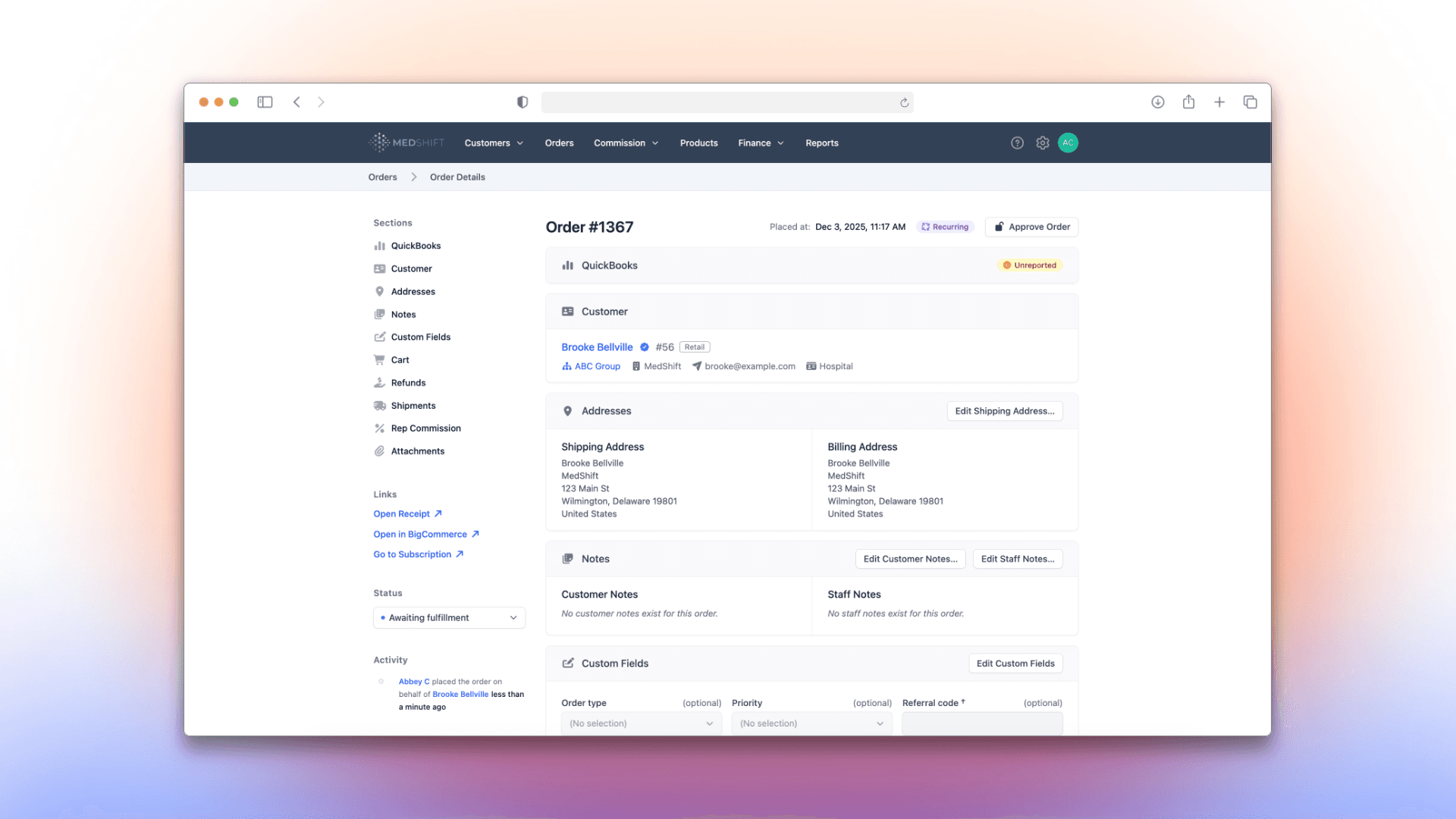
Sometimes, to think big, you need to work small. B2B brands often invest in major e-commerce sales platforms with the expectation that these platforms will solve every operational problem that comes with growth. But if you are trying to run complex rep-driven sales processes straight out of the box without the right order management integrations, things start to break down fast.
Orders come in from too many places. Reps rely on email threads and spreadsheets. Back-office teams spend their days relaying information that should already be connected. What begins as a workable workaround turns into operational drag.
That drag carries a real cost. The market expects speed across the entire sales process, from onboarding and quoting to ordering and commission tracking. If your team is still saying, “We’ll enter it later,” you are creating more than a temporary delay. You are opening the door to errors, duplicate work, rep frustration, and a customer experience that feels less polished than it should. At a certain point, growing B2B companies need more than a storefront and a patchwork of manual processes. They need a system that brings clarity to the moving parts around the sale.
The Hidden Cost of “We’ll Enter It Later”
For many teams, B2B orders arrive from everywhere. Some customers place them online while others work directly with a rep. Internal teams may key in orders for strategic accounts, wholesale partners, or customer service follow-ups. All of those orders still need to end up in the right place, associated with the right customer, linked to the right rep, and reflected accurately in reporting.
When that process is manual, the pain shows up quickly. And what you might not realize is that your B2B platform was never meant to do it all. Platforms like Shopify and BigCommerce provide a strong foundation with amazing core B2B capabilities, but the problem is everything that surrounds that core. As sales become more complex, your business needs more structure around the platform than that platform was ever designed to provide.
Most B2B teams need:
High-level views of all orders, no matter where they originated
Consistent B2B territory assignment and management
Streamlined order placement that keeps your reps from living in the store admin
A singular source of truth for commissions across complicated hierarchies
Native features can help you get started, but as your enterprise scales, you outgrow what’s available out of the box. You start by duct-taping together custom portals, spreadsheets, and one-off apps one by one until Frankenstein’s monster is holding your backend together. Before long, the business is relying on a stack of half-connected tools and institutional knowledge that only a few team members fully understand.
Why You Need B2B Order Management that Works With Your Store
As B2B businesses grow, orders start coming in from multiple directions. It’s all about workflow connection. When those workflows stay disconnected, visibility breaks down fast. Sales cannot easily track order progress, operations spend time reconciling data manually, and leadership struggles to understand performance across channels.
That problem gets worse when reps are expected to drive revenue using systems that were not built for rep-led ordering. In too many organizations, reps still have to rely on store admins or back-office teams to place orders, check status, or confirm account details. This slows the sales process and turns internal teams into bottlenecks. A stronger approach is a B2B order management layer that works with your store while giving reps a dedicated, controlled way to manage the tasks they actually need to handle.
Ownership is another reason this is important. As sales teams expand, businesses need a reliable way to assign accounts, route orders, and connect activity to the right rep or team. If B2B territory management rules and customer ownership are handled manually, confusion builds quickly. The same is true for commissions. When compensation depends on spreadsheets or manual exports, trust erodes and administrative burden rises. The right sales rep portal helps solve this by connecting orders, reps, ownership, and compensation inside one structured system.
What The Right B2B Order Management Solution Provides
The best B2B order management solutions do not force businesses to replace a strong e-commerce foundation. Instead, they strengthen the workflows around the store by creating a cleaner operational layer. That starts with unifying orders across channels so the business has one coherent view of sales activity, regardless of where an order originated.
A strong solution should also give reps the visibility they need without requiring them to work directly in the store backend. Reps should be able to place orders, review account information, and track progress in an environment built for selling, while admins still maintain appropriate control. Territory assignment and customer ownership should be supported in a way that matches how the business actually operates, whether that means geographic territories, named accounts, or a hybrid model.
Commission visibility is another key feature to evaluate. A useful system should connect attribution, order flow, and compensation logic so reps and admins can trust the numbers without relying on manual cleanup. Just as important, the platform should reduce operational strain rather than add another disconnected tool to the stack. The right B2B solution creates a smoother path for data, decisions, and sales activity to move through the business, which translates directly into less time spent doing math at the end of the month.
And that smoother path means keeping your reps out of the backend. You need a solution that pulls every order source into one B2B layer, then feeds clean, structured data back into your existing e-commerce platform. E-commerce stays where it belongs, and your reps stay in the front end. Your solution needs to provide them a dedicated portal that works where they physically are – whether that’s in the field with a mobile OS, or on a computer. Never forget that even online sales have a physical component, and buying and selling is done by people who exist in the real world!
Bring Your B2B Sales Into Focus
If your team is still taking B2B orders in the backend of your store, over the phone, and in scattered spreadsheets, you’re leaving clarity on the table. Shopify, BigCommerce, and similar platforms give you the big e-commerce foundation you need. The right solution brings the pinpoint precision that your sales teams, customer service, and e-commerce operations need for one coherent B2B flow.
Velocity Commerce is that solution, offering everything you need to keep the chaos under control and give your B2B team the tools they’ve been missing. But don’t just take our word for it; Schedule a Velocity demo and learn how this can work with your own data and sales structure.