
Why Do You Need a Shopify Order Management System?
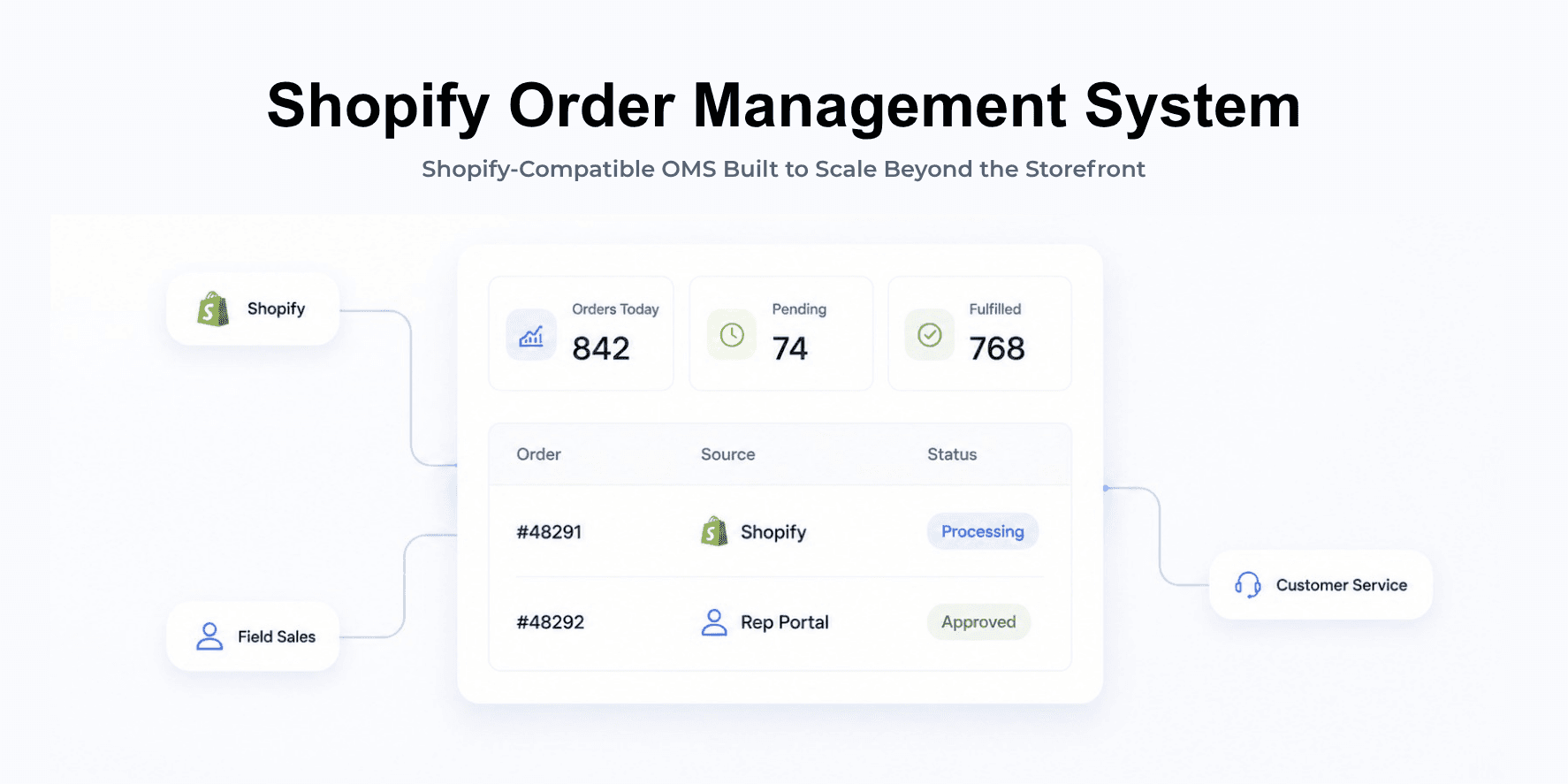
Ten orders a day? Shopify handles that beautifully. But what happens when hundreds of orders start flowing in from your online store, field reps, customer service teams, and wholesale portals all at the same time?
That is the moment most growing brands realize they need more than what any single platform was designed to handle. Not because Shopify falls short, but because its operations have evolved into something bigger. A dedicated Shopify order management system fills that gap, working alongside Shopify to give you a single place to manage everything as you scale.
This guide covers what an OMS actually does, when it makes sense to add one to your Shopify setup, and how to pick the right one for your business.
INDEX
What Is an Order Management System (OMS)?
How Shopify Handles Orders by Default
When Your Business Needs a Shopify-Compatible OMS
Key Features of an Order Management System
Who Benefits Most from an OMS?
What to Look for When Choosing an OMS for Shopify
How Velocity Extends Order Management Functionality in Shopify
FAQs
How do you manage orders in Shopify?
Does Shopify have an order management system?
What does sales order mean?
What is the difference between a PO and a sales order?
What is a sales order vs. an invoice?
What Is an Order Management System (OMS)?
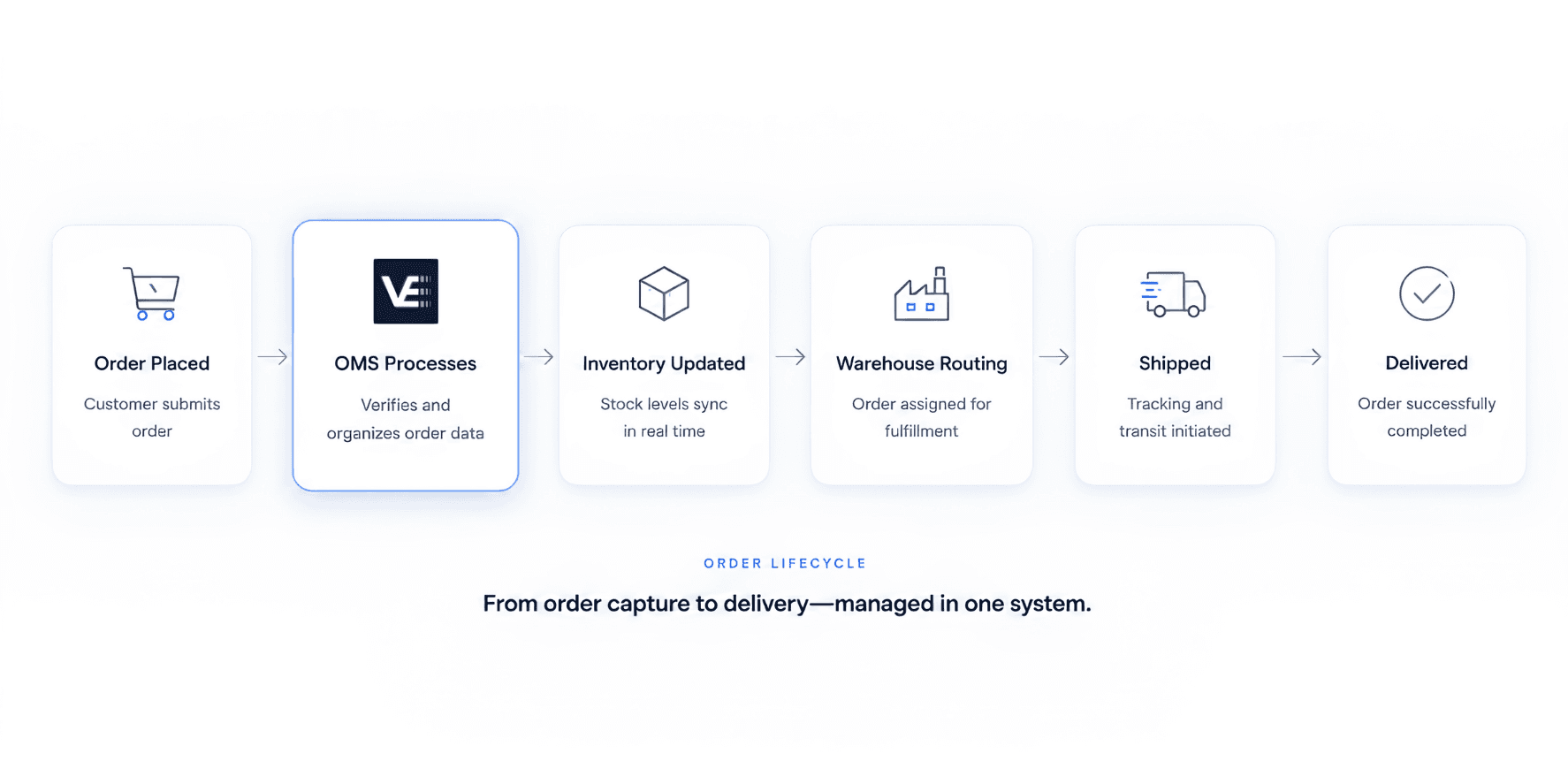
An order management system is software that handles the full lifecycle of an order: customer clicks "buy" (or a rep places the order on their behalf), the system processes it, inventory gets updated, the order routes to the right warehouse, and the product ships.
Basic order tracking just logs purchases. An integrated order management software solution does a lot more:
Connects your sales channels into one unified view
Synchronizes inventory in real time across all locations
Routes orders to the right warehouse or fulfillment center automatically
Gives your team visibility into every step from placement to delivery
For Shopify merchants, an OMS works as a centralized command center that sits on top of your store and extends what Shopify already does so well. It pulls data from every channel you sell through and puts it in one place.
The simplest way to think about it: Shopify is your storefront. An OMS is the operations engine that helps it scale.
How Shopify Handles Orders by Default
Shopify provides a strong set of built-in tools inside the Shopify admin. Out of the box, you can:
View and filter incoming orders
Process payments and issue refunds
Create shipping labels and mark orders as fulfilled
Track basic inventory across products
Manage customer records
For small to mid-size stores selling primarily through their Shopify storefront, these tools cover everything you need. Clean interface. Straightforward workflows. Shopify covers order processing and fulfillment beautifully without any extra software.
These native tools were designed for direct-to-consumer (DTC) stores running a single channel, and they do that job very well. As your business evolves into multi-channel sales, B2B operations, or field rep management, you naturally start layering additional tools on top to handle the new complexity.
When Your Business Needs a Shopify-Compatible OMS
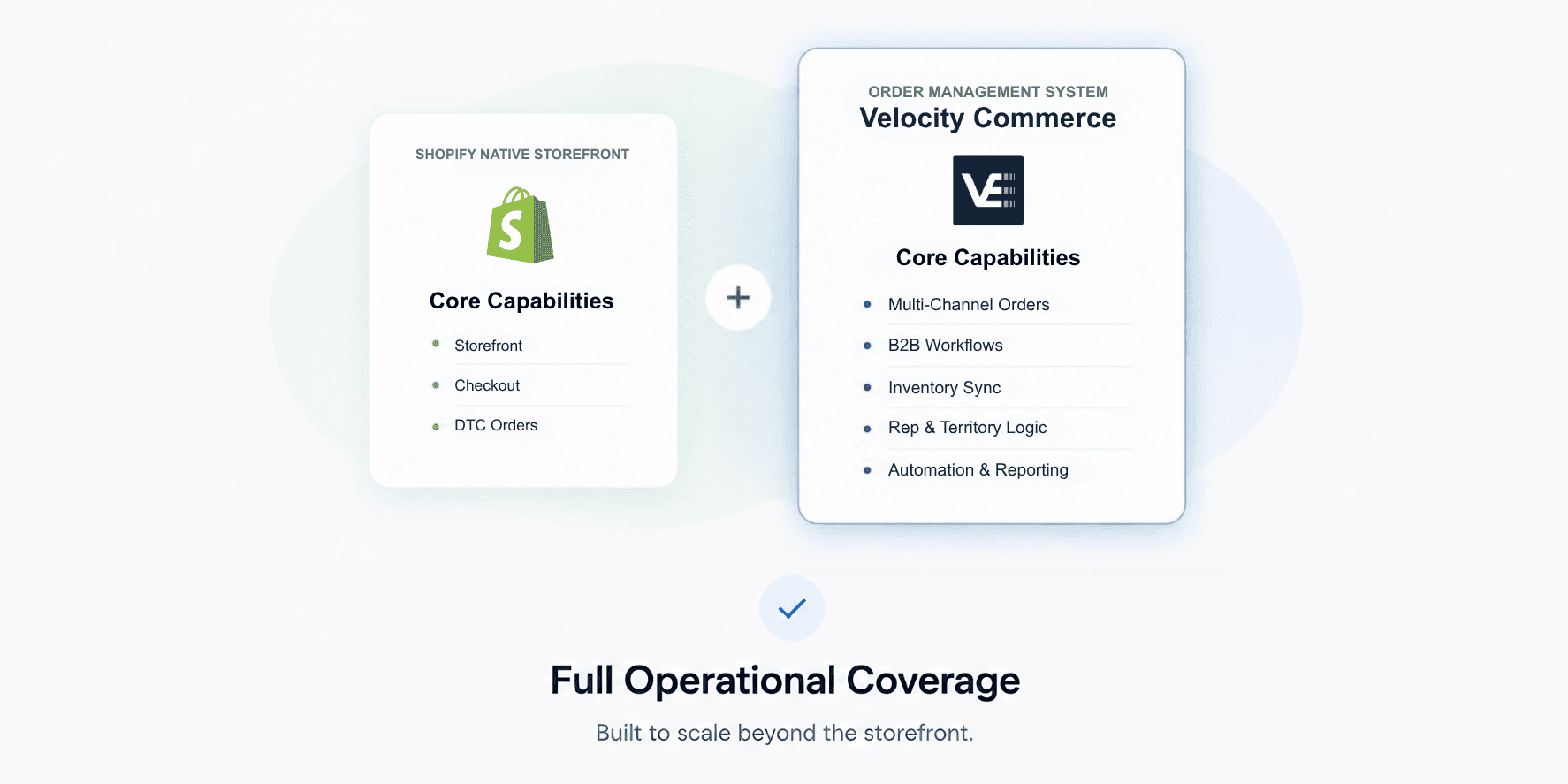
Shopify's native order management is the foundation, and it works exactly as it should for DTC. Once your operations grow into any of the scenarios below, an OMS extends that foundation with the capabilities you need next.
Multi-Channel Sales
Shopify store, wholesale portal, Amazon, field sales team. As you add channels, you need a layer that stitches all of them together into one consistent order stream. An OMS pulls every order from every source into the same view, so your team is not jumping between systems to know what is happening.
Real-Time Inventory Across Channels
The more places you sell, the more important real-time inventory management becomes. An OMS keeps your stock data accurate across every sales source, which means fewer oversells, fewer stockouts, and customers who trust the numbers they see.
B2B and Field Sales Workflows
Shopify is ideal for buyers checking out themselves. B2B can be a different animal: territories, reps placing orders for customers, commissions, customer-specific pricing. An OMS adds the dedicated portal, territory rules, and rep tools that B2B operations rely on, without changing how your DTC side runs.
Automation as You Scale
Assigning orders to the right rep, applying customer-specific pricing, managing approvals, handling split shipments. These are easy processes to manage at low volume. At higher volume, an OMS automates them so your team can focus on the work that actually moves the business forward.
Deeper Reporting
Shopify's reporting covers what most stores need. When you start asking questions like "what is each rep's territory generating?" or "which channels are most profitable?", an OMS gives you that visibility without exporting everything to spreadsheets.
If any of these match where your business is heading, a dedicated order management system to use with your existing Shopify infrastructure is the next logical layer to add.
Key Features of an Order Management System
When you start evaluating an order management app or platform to use with Shopify, these are the capabilities that separate the useful tools from the ones that just add complexity.
Centralized Order Hub
Every order from every channel (online store, sales reps, phone orders, wholesale portals, marketplaces) should land in a single dashboard. No tab-switching. No logging into three different systems to figure out what is happening.
Real-Time Inventory Synchronization
This one is non-negotiable. The system needs to update inventory counts automatically as orders come in, regardless of the source. Fewer oversells, more accurate stock data, better purchasing decisions. When your inventory is wrong, everything downstream suffers.
Automated Order Routing
When an order comes in, the OMS should figure out where it goes without anyone touching it:
The correct fulfillment location based on inventory and proximity
The right sales rep based on territory rules
Any approval workflows that need to trigger before processing
For businesses running multiple warehouses or distribution points, this alone can save hours per day.
Sales Rep Management and Territory Mapping
If you run B2B operations, this is where things get interesting. Map territories, assign customers to reps, and control exactly what each rep can see. Reps access only their own customers, orders, and commissions. One feature. Massive reduction in administrative overhead.
Commission Tracking and Automation
Paying commissions to sales reps? The OMS handles the calculations automatically based on rules you set up once. End-of-month reconciliation in spreadsheets becomes a thing of the past.
Customer-Specific Pricing and Payment Terms
B2B buyers work on negotiated pricing, payment terms, and minimum order quantities. A strong OMS supports these rules at the customer level, so nobody has to manually override pricing on every single order.
Integration with Your Existing Stack
The best order management system for Shopify plugs into what you already use: Shopify itself, your ERP, CRM, accounting software, and shipping carriers. Fewer silos, fewer problems.
Who Benefits Most from an OMS?
Any growing Shopify store benefits from better order management. But certain business types see results that are hard to ignore.
B2B Sellers and Wholesalers. Purchase orders, custom pricing tiers, payment terms. An OMS adds the workflows B2B operations rely on, complementing what Shopify already does for your DTC side.
Brands with Field Sales Teams. Territory mapping, rep portals, commission automation. If your reps place orders on behalf of customers, an OMS gives them the tools designed for that job, all integrated with your Shopify store.
Multi-Channel Merchants. Selling through Shopify plus marketplaces, retail, or wholesale? Centralized order management is what keeps everything organized as you grow.
Businesses Scaling Beyond One Warehouse. Multiple fulfillment locations introduce routing decisions. Which warehouse is closest? Which has stock? Which is cheapest to ship from? An OMS makes these decisions automatically on every order.
What to Look for When Choosing an OMS for Shopify
There are dozens of order management software options for Shopify stores on the market. These are the factors that matter most when narrowing down the list.
Native Shopify Integration
You want an OMS that integrates directly with Shopify, ideally as a native app, not through clunky middleware. Direct integration means faster setup, fewer sync issues, and seamless compatibility as Shopify rolls out updates.
Ease of Implementation
If it takes months to deploy and requires a dedicated IT team to maintain, most Shopify merchants are going to struggle with it. Minutes or hours to set up, not quarters. That should be the benchmark.
Scalability
50 orders a month today, 50,000 next year. The platform needs to handle that growth without performance degradation or forcing you into a migration. Ask vendors directly: what happens when our volume doubles?
B2B and Wholesale Capabilities
Planning to sell B2B? Already doing it? Either way, make sure these are built in from day one:
Territory management with flexible mapping
Sales rep portals with controlled visibility
Custom pricing and payment terms per customer
Commission structures with automated calculations
Trying to bolt these features on later is expensive and painful.
Support and Onboarding
This matters more than most buyers realize. Hands-on onboarding, training for your team, and responsive support after launch. The best software in the world is useless if you cannot get help when something breaks.
Mobile Accessibility
Reps and ops teams need order data on the go. Whether the OMS has a dedicated mobile app or a responsive web interface, the experience on a phone or tablet needs to be fast and functional. Not an afterthought.
Related reading: Best Order Management System for B2B Ecommerce, a side-by-side comparison of top OMS platforms for B2B brands.
How Velocity Extends Order Management Functionality in Shopify
Velocity Commerce is an order management system built to use with Shopify, designed for B2B brands ready to scale beyond standard DTC operations. It works as both a Shopify App and a standalone platform, extending Shopify with the specific capabilities growing B2B teams need.
A few specifics on what it does:
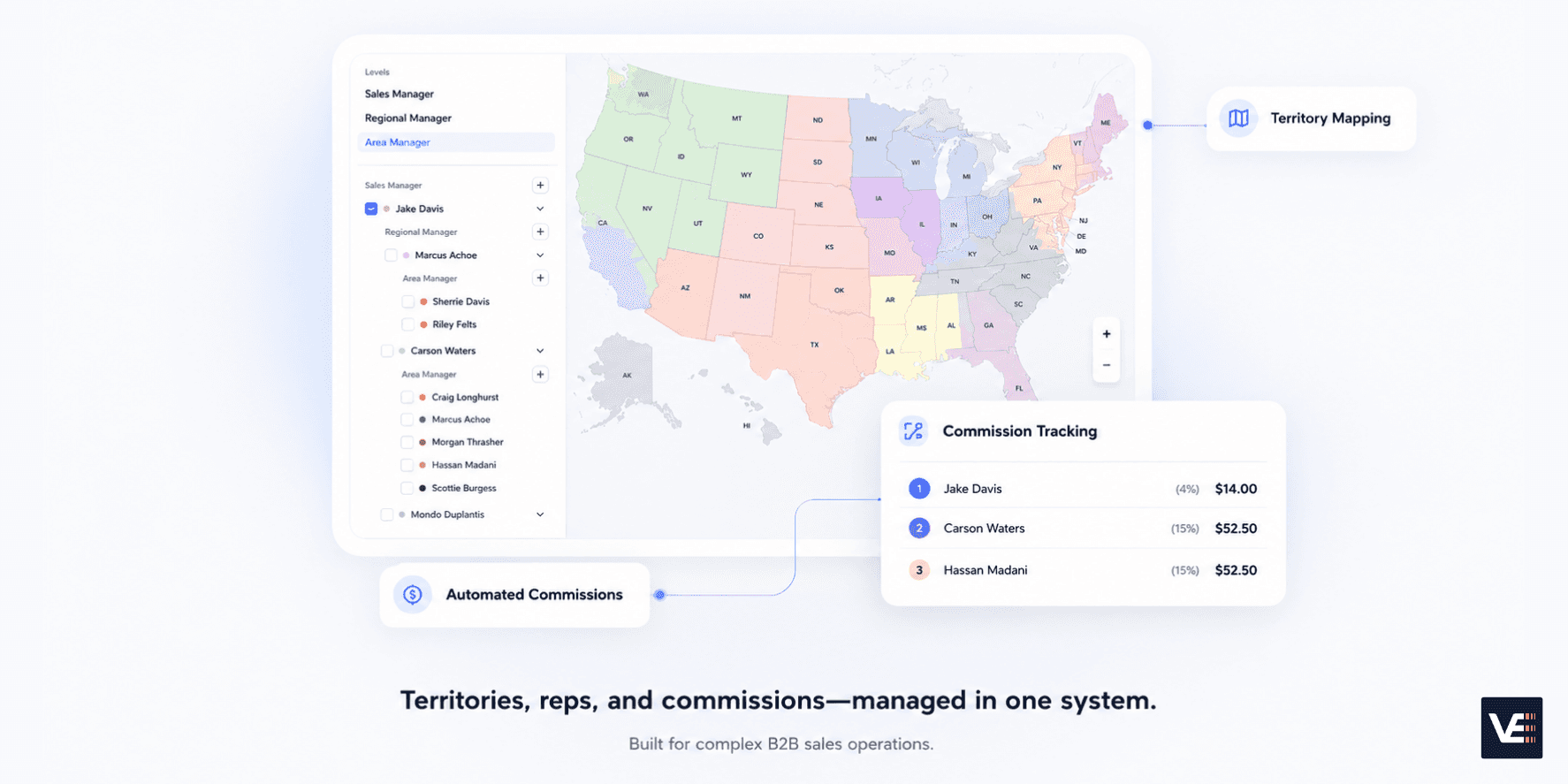
Unified Order Capture. Orders from your Shopify store, field reps, and customer service team all land in one system. Velocity automatically assigns each order to the correct sales rep based on territory rules you configure.
Sales Rep Portal. Reps get their own mobile app to onboard new customers, place orders, and check commissions. They only see their own customers and data. Clean separation, real accountability.
Territory Mapping and Commissions. Assign customers to reps by ZIP code or location. Velocity supports up to six layers of sales hierarchy, and commission calculations run automatically. No spreadsheets. No month-end scramble.
Virtual Payments and Warehousing. Through a Stripe integration, you can securely store customer payment methods (ACH and credit card), so reps and customers can place orders without re-entering payment details every time. Faster orders, fewer friction points.
Fast Implementation. Install it from the Shopify App Store. Set up territory and commission structures without needing a developer. You can be live in days.
Velocity also works with BigCommerce, Wix, WooCommerce, and other e-commerce storefronts - so if you run operations across multiple platforms, you are covered.
Whether you are a manufacturer, distributor, or wholesale brand on Shopify, Velocity adds the B2B layer that turns your Shopify store into a complete operations platform.
Schedule a demo → to see how it works for your setup.
FAQs
How do you manage orders in Shopify?
Through the Shopify admin dashboard. You can view incoming orders, process payments, print shipping labels, mark orders as fulfilled, and issue refunds. These tools cover what most DTC stores need. Once you add multiple sales channels, B2B workflows, or high order volumes, layering a dedicated order management system on top of Shopify keeps everything running smoothly.
Does Shopify have its own order management system?
Yes. Shopify includes a strong set of order management features as part of its core platform: order tracking, inventory management, and fulfillment workflows from the admin panel. For more specialized needs like territory mapping, commission tracking, multi-channel order routing, or sales rep portals, Shopify merchants typically add a complementary OMS like Velocity that integrates directly with their store.
What does sales order mean?
A sales order is the seller's confirmation of a transaction. It records which products the buyer requested, the quantities, agreed pricing, and delivery terms. Think of it as the seller's internal record that says "this is what we need to process and ship." In Shopify, the order record created when a customer (or a sales rep on their behalf) places a purchase functions as a sales order.
What is the difference between a PO and a sales order?
The buyer creates the purchase order (PO). The seller creates the sales order in response. One is a request. The other is a confirmation.
PO = "We want to buy these items at these terms."
Sales order = "Confirmed. We will deliver them."
In B2B, these two documents together create a paper trail that protects both sides.
What is sales order vs. invoice?
Timing is the difference. A sales order comes before shipment and confirms what the seller will deliver. An invoice comes after shipment and tells the buyer what they owe. That is really it.
Final Thoughts
Shopify gives you a strong foundation for running an e-commerce business. As your operations grow into multi-channel sales, B2B relationships, or field rep management, a dedicated order management system alongside Shopify extends that foundation with the capabilities you need at the next stage.
The right OMS does not replace what Shopify does well. It adds the layer that helps you scale, eliminating manual bottlenecks and giving your team real-time visibility across every order and channel.
If your business relies on sales reps, manages B2B relationships, or processes orders from more than one channel, an OMS that partners with Shopify is one of the highest-impact investments you can make.