How to Offer Financing to Customers: A Playbook for Equipment and Device Sellers

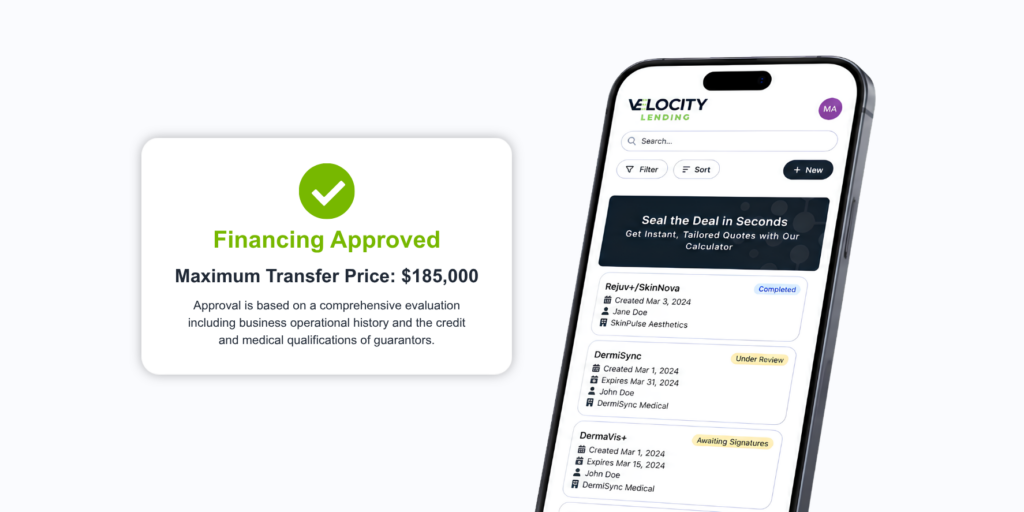
A sales rep can walk into a customer’s office with the right product, a strong demo, and a buyer who’s already made up their mind, yet still lose the deal over the payment structure. The customer wants the equipment. What they don’t want is a $70,000 purchase hitting their balance sheet this quarter.
Offering financing to customers changes the conversation from whether the buyer can afford the purchase to which term fits their cash flow. That shift can be the difference between a deal that closes in the room and one that goes quiet for six weeks while the customer talks to their bank.
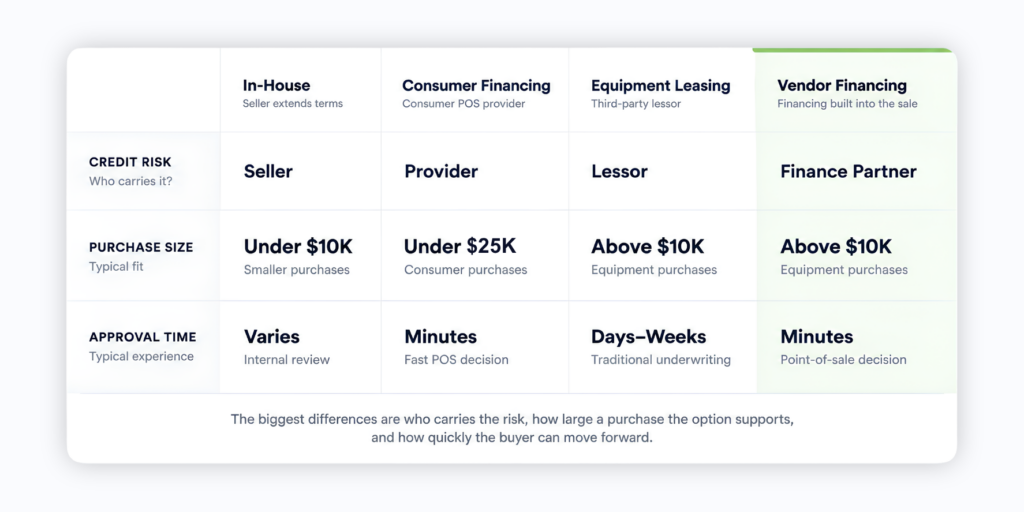
But not every financing route delivers that outcome. The four common approaches differ significantly in who carries the credit risk, how quickly an approval comes back, and how large a purchase they can support. Choosing the wrong one can cost sellers deals in ways that don’t show up clearly in a pipeline report.
| TL;DR: There are four main ways to offer financing to customers, and they’re distinguished by who carries the credit risk. In-house financing keeps the risk with you and only works best on smaller tickets with trusted customers. Consumer point-of-sale financing transfers the risk but underwrites individual consumers, so it rarely fits business equipment purchases. Equipment leasing moves the risk to a lessor but can take weeks. Vendor financing programs move the risk off your balance sheet, and the strongest versions pay you in full at the point of sale. For equipment purchases from $10,000 to $185,000, vendor financing can address both seller risk and approval speed, while offering flexibility to support larger transactions in some cases. |
What It Means to Offer Financing to Customers
Offering financing means giving the customer a way to pay over time instead of paying the full amount at purchase. The seller either extends those terms directly or works with a third party that pays the seller and collects from the buyer on a schedule.
How that works differs significantly depending on who’s buying. Consumer financing underwrites an individual, usually for purchases under $25,000, with approval relying heavily on a personal credit score. Business equipment financing underwrites a company, often with one or more personal guarantors, and routinely covers purchases in the five- and six-figure range.
That distinction matters more than most financing guides acknowledge. A financing product built for retail checkout isn’t designed to evaluate a two-year-old LLC buying a $90,000 device, and using it anyway can produce a decline unrelated to the customer’s ability to pay.
Why Equipment Sellers Lose Deals Without a Financing Option
Capital equipment purchases compete with every other use of a buyer’s cash. When the only option is paying in full, the purchase can get postponed to the next budget cycle, where deals often lose momentum.
Financing reduces the timing problem by separating the purchase decision from the buyer’s immediate cash position. A buyer who can’t release $70,000 this month may be able to approve a monthly payment that fits within operating expenses, turning a deferred decision into a signature.
Speed matters just as much. When a rep has to send the customer off to arrange their own bank loan, the seller loses control of both the timeline and the deal. Traditional underwriting can take weeks, requires bank statements and tax returns, and gives the buyer time to reconsider or shop a competitor.
The Four Ways to Offer Financing to Customers
Most articles on this topic list providers. A more useful way to sort the options is by who ultimately holds the paper, because that determines what you can offer, how much you can offer, and what happens if a customer stops paying.
In-House Financing
You extend payment terms directly and invoice the customer on an agreed schedule. Net 30 is the simplest version. Structured installments over 12 or 24 months can have a greater impact on a buyer’s decision.
The credit risk stays entirely with you. So do the collections work, credit assessment, and cash flow gap between shipping the product and receiving payment. Days sales outstanding increases, and you take on a function that most equipment sellers aren’t staffed to manage.
In-house financing works best when purchases are modest, the customer relationship is long-standing, or you have enough working capital to absorb a default without significant strain. Outside those conditions, it can be an expensive way to close a sale.
Third-Party Consumer Financing
A point-of-sale financing provider pays you at the time of sale and collects payments from the buyer over time. You pay a merchant discount fee, typically a percentage of the transaction, in exchange for the provider taking on the credit risk.
The model is well suited for retail, home services, and elective consumer purchases. It’s less suited to B2B equipment sales. These providers underwrite individual consumer credit, often cap approvals below typical capital equipment costs, and may run a hard credit inquiry on the person applying. When the buyer is a business entity, the underwriting is focused on the wrong subject.
Equipment Leasing
A lessor purchases the equipment, and the customer pays to use it. Operating and capital lease structures offer different treatment at the end of the term and on the customer’s books.
Leasing supports high-ticket purchases, giving it a clear advantage over consumer financing while moving the credit risk to the lessor. The tradeoff is the process. Traditional lease approvals can require financial statements, take days or weeks to return, and force the rep to hand the customer off to a third party when the deal has the most momentum.
Vendor Financing Programs
Financing is built into the sale itself rather than added after the quote. The rep runs the application, receives a decision, and produces a contract directly from the customer’s office.
Some vendor financing models go further than arranging a loan. The finance partner purchases the equipment from the manufacturer or distributor at an agreed transfer price and places it with the end customer, so the seller receives payment in full at the point of sale without entering the credit relationship. Velocity Lending uses this model, allowing a rep to close on a five- or six-figure device without the seller carrying the credit risk.
How to Choose Between Customer Financing Options
The right route comes down to four questions, and answering them honestly narrows the field quickly.
- Purchase size. For smaller purchases, in-house terms or a consumer provider can work. For larger purchases, leasing or a vendor program is better suited.
- Risk tolerance. If a single default would strain your cash position, an option that leaves the paper with you may not be the right fit.
- Approval speed. If your sales cycle depends on closing during the visit, an underwriting process measured in days can undermine the advantage financing was supposed to create.
- Where the rep works. Field sales teams need access to the entire workflow from a phone. Programs that require a desktop portal or a call to a credit desk create friction during a sales visit, a constraint we cover in our guide to field sales software.
What to Look for in Customer Financing Solutions
Evaluating customer financing solutions comes down to a short list of operational details that vendors don’t always volunteer. Ask about each one directly.
- Credit inquiry type. A soft credit check lets a rep run an application without asking the customer to accept a mark on their credit file, removing a common reason buyers hesitate to apply.
- Decision time. Ask for the average, not just the fastest advertised time. The gap between the two tells you what reps will actually experience.
- Approval rate. A fast decline can still mean a lost deal. Approval rate matters as much as speed.
- Documentation requirements. Programs that frequently require bank statements can add days to the process.
- Term flexibility. Multiple term lengths let the rep align the monthly payment with what the customer can absorb rather than presenting a single option.
- Deferral options. A delay before the first payment can give the customer time to generate revenue from the equipment before payments begin.
- Prepayment treatment. Penalties for early payoff can make financing less attractive to well-capitalized buyers.
- Documentation quality. Audit-ready records from the first customer interaction through delivery provide a clear record if a contract is ever questioned.
How Vendor Financing Works in Practice
Velocity Lending runs the entire financing workflow from the rep’s phone, with the process taking minutes rather than days.
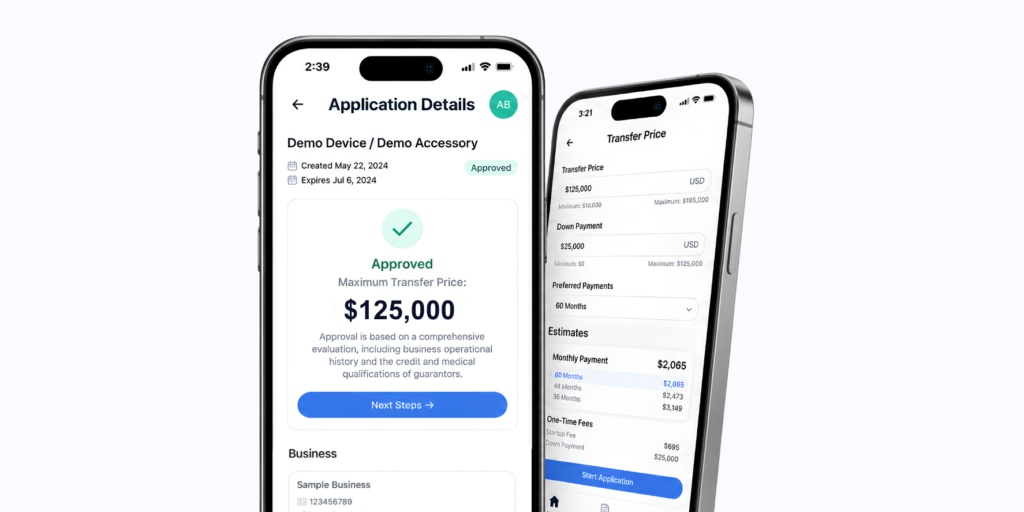
The flow runs in six steps:
- Install the app. Reps access Velocity Lending from iOS, Android, or desktop.
- Submit an application. The rep enters the customer’s business details, adds the products, and attaches up to three guarantors, with one designated as primary.
- Receive a decision. Automated underwriting can return an answer in under 30 seconds.
- Set the transfer price. The transfer price is the amount MedShift pays to purchase the product from your organization, with each configured product carrying a valid price range.
- Choose the term. Terms are available for 24, 36, 48, or 60 months, with a deferral period available before the first payment is due.
- Send the contract. A DocuSign agreement is automatically sent to the customer, and the rep can track signing progress in real time.
The performance behind that flow matters more than the step list. Decisions average 4.7 seconds and 90% of deals close without bank statements. Applications use a soft credit check only, so applying doesn’t affect the customer’s credit score, and there’s no penalty for paying off a balance early. Velocity Lending supports product costs from $10,000 to $185,000, with financing beyond $185,000 also available in many cases.
The payment structure differs from a conventional loan. Rather than separating principal and interest into distinct components, Velocity Lending uses a subscription model that combines them into one monthly payment, making it easier for a customer to evaluate against their operating budget.
Underwriting takes a holistic view rather than screening on FICO, years in business, or specialty alone, allowing the program to approve non-core and non-physician businesses. That broader view lets Velocity Lending consider businesses where a conventional credit screen would decline.
The platform is HIPAA and SOC compliant, with more than 55 device manufacturers and 26 banking partners currently running volume through it. Medical device and aesthetics equipment currently represent the largest share of that volume, though the transfer price model applies to any equipment category with comparable purchase sizes.
Mistakes That Cost Sellers Deals
Introducing financing only after a price objection. By the time the customer pushes back on the number, financing can feel like a concession rather than a standard purchase path. Presenting a monthly figure alongside the total price from the first conversation can help reps address payment concerns earlier
Choosing a partner that runs a hard credit inquiry. Customers may hesitate to apply, and the rep may never learn whether the deal was winnable.
Skipping rep training. A financing program the sales team doesn’t understand can easily go unused. Reps may default to what they know: quoting a total price and leaving the customer to find the money.
Running a desktop-only workflow. Financing that requires the rep to return to an office can cost the close. Mobile access is essential, as covered in our roundup of sales rep apps.
Treating financing as a finance function. When financing lives with the credit department instead of the sales team, each application requires a handoff that can add days to the process.
Final Thoughts
The question isn’t whether to offer financing to customers, but which structure best fits what you sell. In-house terms and consumer point-of-sale providers both have legitimate uses, but neither is well suited to a $70,000 capital equipment sale to a business.
For equipment in that range, the right financing structure keeps credit risk off your balance sheet and returns a decision fast enough to close during the visit. With Velocity Lending, the equipment is purchased from you at an agreed transfer price and placed with your customer, so you’re paid in full at the point of sale while the customer gets a payment structure they can approve on the spot.
See how the approval flow works with your product catalog, or email lending@medshift.com to request access for your sales team.
FAQs
Offering financing means giving customers a way to pay for a purchase over time instead of in full at the point of sale. The seller either extends terms directly or works with a financing partner that pays the seller upfront and collects from the customer on a monthly schedule.
You have four practical options: extend payment terms in-house, work with a consumer point-of-sale financing provider, partner with an equipment leasing company, or join a vendor financing program. For business equipment above $10,000, vendor financing and leasing are generally better suited to larger purchase amounts.
Yes. In a vendor financing program, the finance partner underwrites the customer and holds the contract, so you don’t extend credit yourself. With Velocity Lending’s structure, the partner purchases the equipment from you at a transfer price and places it with the customer, meaning you’re paid in full at the sale with no credit exposure.
It depends on the structure. Consumer point-of-sale providers typically charge the merchant a discount fee on a percentage of the transaction. In a transfer price model, there’s no separate merchant fee, because the economics are built into the agreed price at which the finance partner purchases the product from you.
That depends on the provider. Many consumer financing companies run a hard credit inquiry, which does affect the score. Velocity Lending uses a soft credit check only, so a customer’s credit score is unaffected whether the application is approved or declined.
Equipment financing generally becomes the better option above roughly $15,000, where in-house terms may strain cash flow and consumer providers may not support the full amount. Velocity Lending supports product costs from $10,000 to $185,000, with financing beyond $185,000 also available in many cases.
See how Velocity fits your B2B team.
Schedule a demo