
Field Sales Software: How to Keep Rep Activity and Orders Reportable
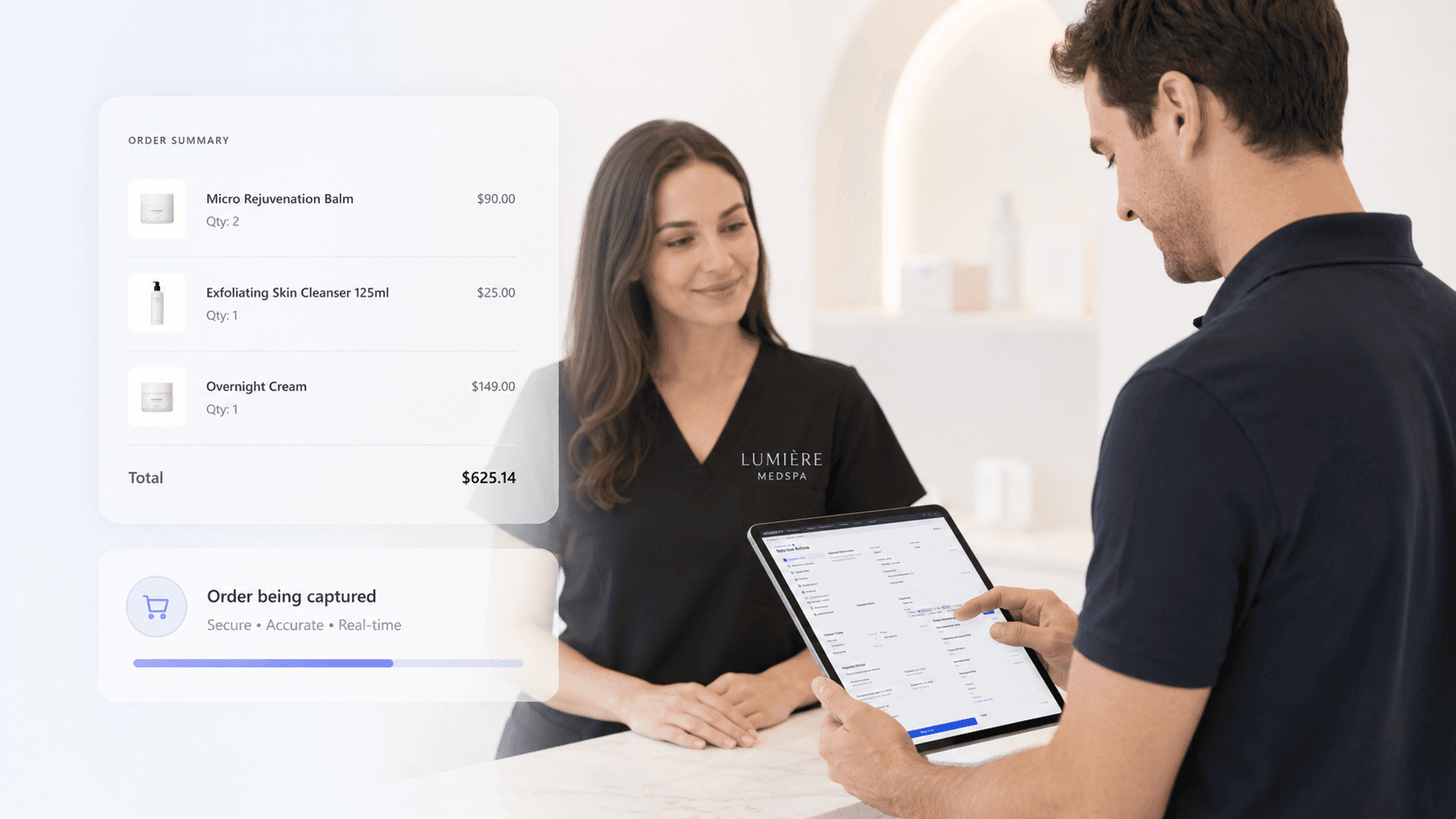
If you run a B2B business with reps in the field, you already know the gap. A rep visits an account, takes an order, and somewhere between that handshake and your books, the data gets messy. The order shows up by email, as a phone call to customer service, or it's scribbled on a sample form. By the time it lands in your ecommerce or ERP system, half the context is gone.
That gap is what field sales software is supposed to close. The problem is that most tools in this category were built for lead generation and route planning, not for the part that actually makes you money: reportable orders, clean territory data, and commissions you can defend at the end of the month.
This guide walks through what field sales software really is, where the typical tools fall short for B2B teams, and what to look for if your goal is to make every rep visit measurable. We'll cover features, the difference between field sales software and a CRM, how it overlaps with field service tools, and how to pick something that fits a hybrid model where reps and ecommerce live side by side.
INDEX
What Is Field Sales Software?
Why Most Field Sales Tools Leave a Reporting Gap
Core Features That Make Rep Orders Reportable
Field Sales Software vs. CRM: What’s the Difference?
The 4 Types of CRM (And Where Field Sales Fits)
Field Sales Software vs. Field Service Software
How to Choose the Right Field Sales Software for B2B Teams
The ROI of Clean Rep Activity Data
FAQs
What Is Field Sales Software?
What Is an FSM vs CRM?
What Is the Best Field Service Software?
What Are the 4 Types of CRM?
What Is Field Sales Software?
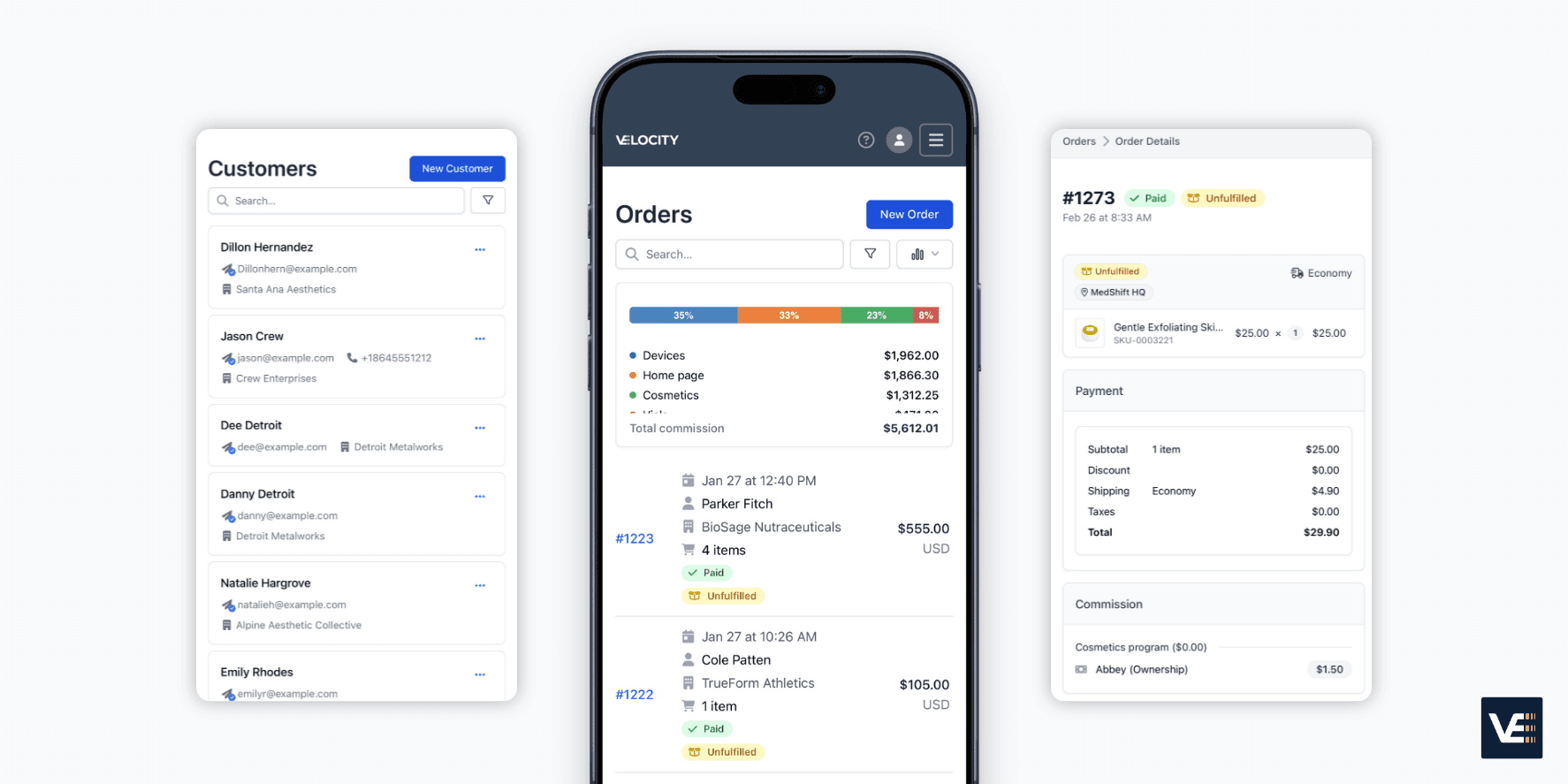
Field sales software is the system reps use to manage their accounts, place orders, and track activity while they're working outside the office. It typically runs as a mobile app on a phone or tablet, with a web back end for managers and operations.
Field sales software acts as the operational bridge between your sales reps, ecommerce platform, finance team, and fulfillment workflows. For field sales reps, it answers practical questions: which customers do I own, when did I last visit them, what did they order, and how much commission do I have coming. On the operations side, it answers a different set of questions: which territories are performing, which orders came from which channel, and where the revenue actually originated.
A few capabilities show up in almost every field sales tool, even if the depth varies a lot:
A mobile interface for reps to access customer records, place orders, and log visits.
Territory mapping so each rep sees only their assigned accounts.
Account history, including past orders, contacts, and notes.
Order or quote entry straight from the rep's device.
Activity reporting for managers to see what's happening across the team.
Where the category begins to split is in what each platform is built to prioritize. Some platforms emphasize prospecting and route optimization for door-to-door sales teams. Others are tailored to retail merchandising for CPG reps walking into stores. A smaller category of field sales software platforms, including Velocity Commerce, is built for B2B teams where the rep is the order channel and the priority is ensuring those orders flow into the same system as ecommerce sales.
Why Most Field Sales Tools Leave a Reporting Gap
Here's the part that doesn't get said often enough. Most field sales platforms are excellent at the front of the workflow and weak at the back.
The front of the workflow is lead generation, mapping, route planning, and visit logging. There are mature tools that handle that well. The back of the workflow is what happens after the rep gets the order: how it gets entered, how it ties to a customer record that matches your ecommerce data, how the commission is calculated, and how it shows up in finance reports.
For B2B brands selling through both reps and a Shopify or BigCommerce store, that back-end gap is where revenue leaks. A few patterns we see all the time:
Orders captured in a rep CRM never sync cleanly with the ecommerce platform, so the same customer ends up with two records.
Commission calculations live in a spreadsheet because no tool tracks rep ownership across both rep-placed and online orders.
Reps and customer service end up duplicating orders, which means refunds, awkward conversations, and damaged trust.
Territory disputes pop up because the system can't say definitively who owned the account at the time of purchase.
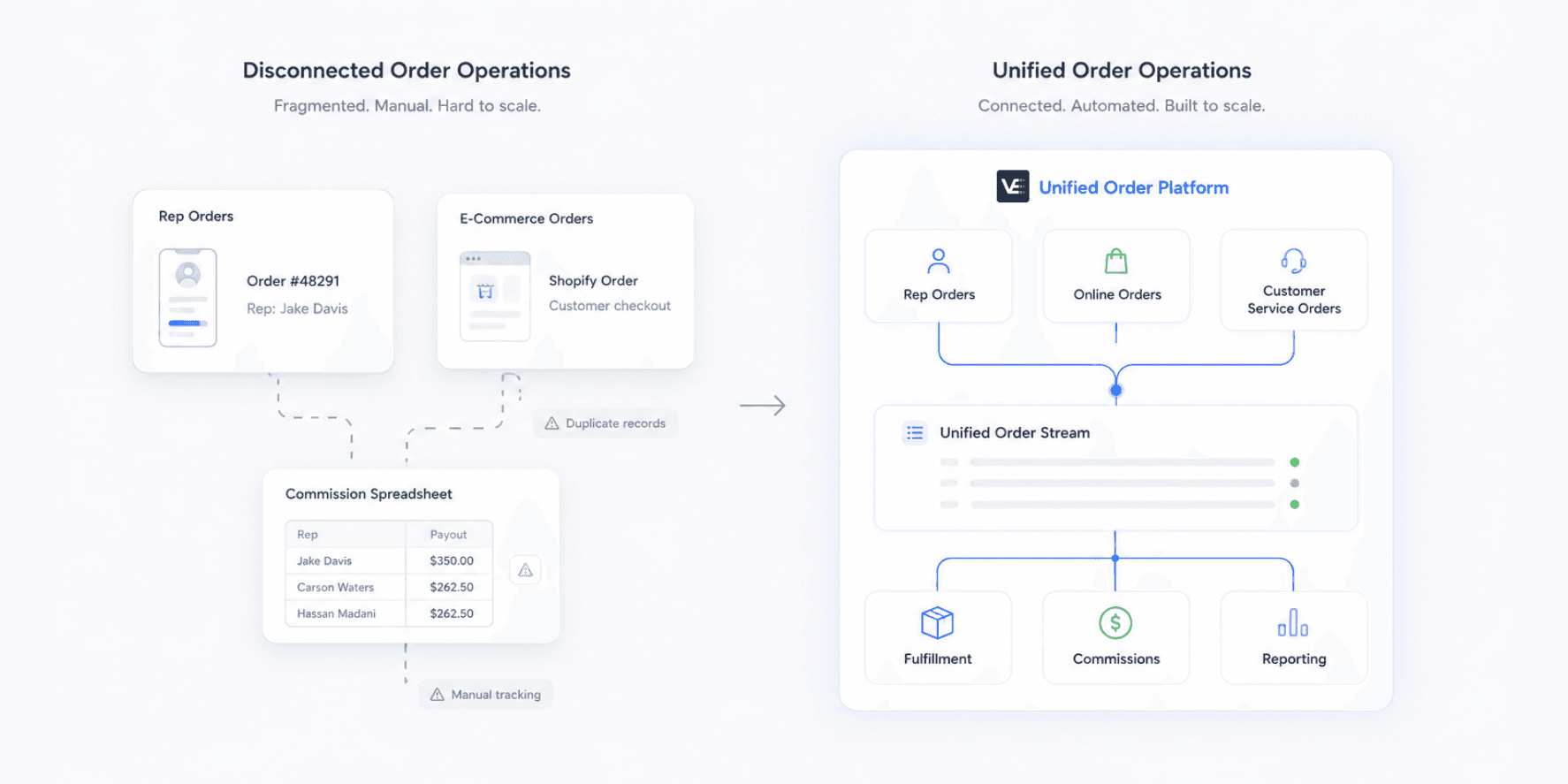
None of this is solved by a better mobile UI or a smarter route planner. It's solved by treating the rep app as a real order entry system that talks to the same data layer as your storefront. That's the standard lens B2B teams should use when evaluating field sales software.
Core Features That Make Rep Orders Reportable
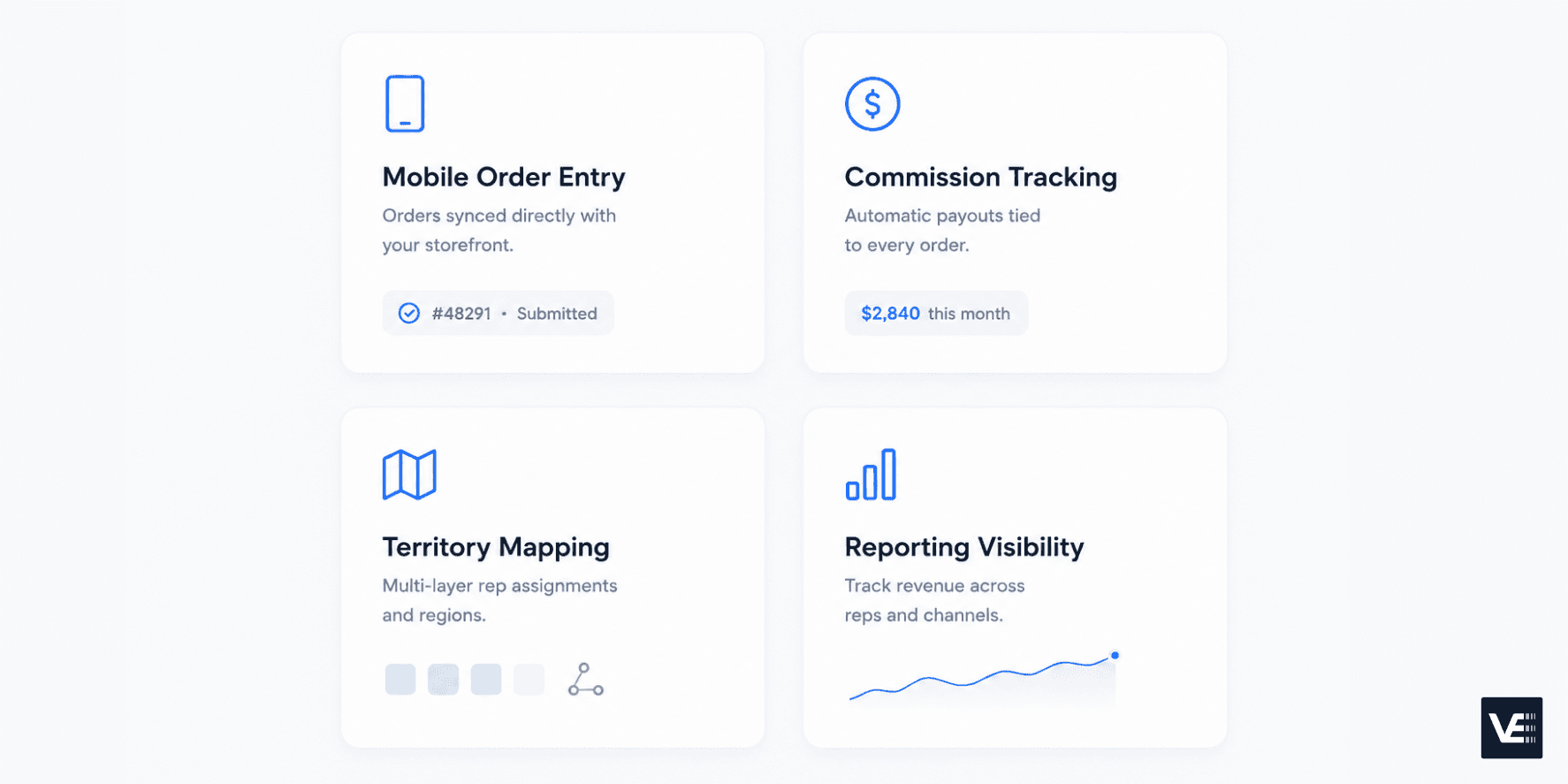
If reportable orders are the goal, the feature list shifts. These are the capabilities that matter:
Mobile Order Entry Tied to Your Storefront
Reps should be able to place orders on a phone or tablet and have those orders land in the same backbone as your ecommerce orders. Same product catalog, same inventory, same customer record. If the rep app and the storefront live in separate worlds, you'll spend the rest of your year reconciling them.
Customer Onboarding From the Rep App
When a rep signs up a new account, they shouldn't have to wait for someone in operations to create a record. Look for tools where reps can onboard customers, capture payment details, and place a first order in a single sitting.
Saved Payment Methods
Velocity uses Stripe for this. The point is simple: the rep takes a credit card or ACH detail once during onboarding, and from then on, repeat orders don't require chasing payment. That alone removes friction from order-to-cash.
Territory Mapping With Multi-Layer Hierarchy
A real B2B sales structure has regions, sub-regions, named accounts, and sometimes overlay reps. Your software needs to handle that without breaking when a rep moves or a territory gets resized.
Automated Commission Calculation
Commissions tied to the order, calculated automatically, visible to the rep in real time. The day commissions live only in a spreadsheet and aren’t accessible to the rep is the day trust starts to erode.
Permissions That Match How Reps Actually Work
Reps should see their accounts, their orders, and their commissions. Not the whole company's data. This sounds obvious until you realize how many tools default to wide-open visibility.
Reporting That Ties Activity to Outcomes
Visit logs are useful, but only if you can connect them to revenue. The reports your ops team needs answer questions like: which accounts haven't been visited and stopped ordering, which territories are growing, and which reps convert visits into orders most reliably.
Channel Attribution Out of the Box
Every order should be tagged with how it came in: rep-placed, online, or customer service. Without that, you can't tell whether the rep team is producing real lift or just picking up orders that would have come in anyway.
Field Sales Software vs. CRM: What’s the Difference?
Short answer: a CRM tracks relationships and deals, while field sales software tracks territories, visits, and orders. Different unit of value, different daily workflow.
A CRM is built around the deal. Contacts, stages, forecasts, and the activities that move opportunities forward. Field sales software is built around the visit and the order that follows it. Many tools blur the line, since CRMs add mobile and territory features, and field sales platforms add contact management. But the core focus is different.
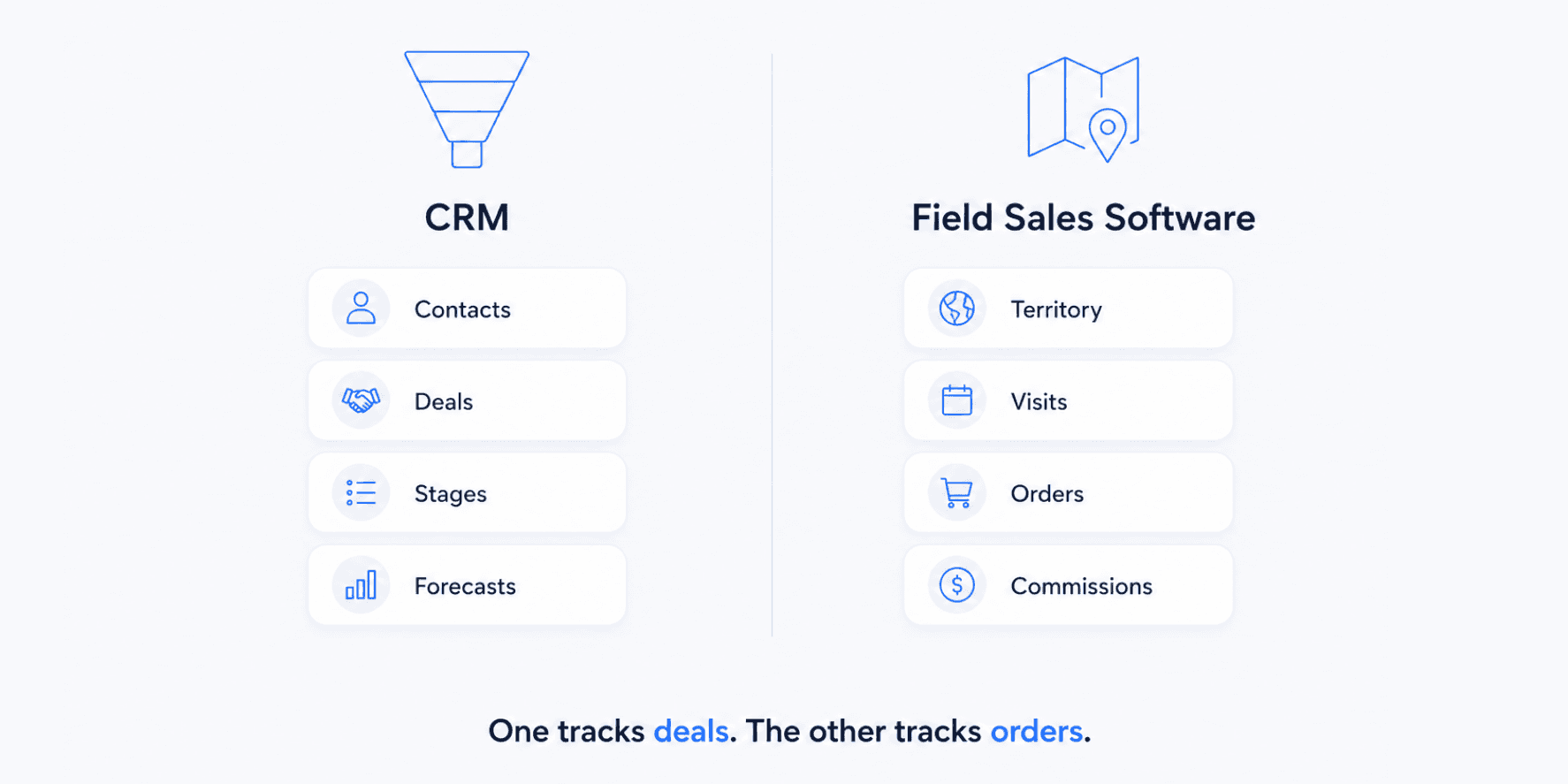
Which one fits depends on how you sell. Long-cycle deals with named opportunities? A CRM is your spine. Repeat orders into a stable customer base through reps in territories? Field sales software is your spine. Doing both is also fine. Most teams run a CRM for early-stage relationships and a field sales platform for order capture and commissions, with integration between them.
For B2B brands selling through ecommerce and reps simultaneously, the bigger gap is rarely "we don't have a CRM." It's almost always "our rep orders and our online orders don't live in the same place."
The 4 Types of CRM (And Where Field Sales Fits)
There are four standard CRM categories: operational, analytical, collaborative, and strategic. Field sales software lives mostly in the operational space, with strong overlap into analytical for territory and rep performance reporting.
Operational CRM. Focused on day-to-day execution: lead capture, contact management, sales automation, and customer service workflows. This is where most field sales features live.
Analytical CRM. Focused on insights: customer segmentation, sales reporting, predictive scoring, and behavior analysis. The reporting side of field sales platforms feeds this layer.
Collaborative CRM. Focused on shared visibility across teams: sales, service, and marketing, all working from the same customer record. Field sales tools touch this when rep notes flow back to customer service or when account managers can see rep activity.
Strategic CRM. A broader category some sources use to describe a long-term customer relationship strategy. Less of a software type, more of an approach.
What sets field sales software apart from a general-purpose CRM is order capture and commission management, which most CRMs don't handle natively.
Field Sales Software vs. Field Service Software
No. Field service software manages technicians doing post-sale work like repairs, installs, and maintenance. Field sales software manages outside sales reps and the orders they generate. Different users, different jobs to be done.
Field service software solves scheduling, dispatch, work orders, parts inventory, and proof of service. The user is a technician. Think HVAC repair or equipment installation.
Field sales software solves territory, customer relationships, order entry, and commissions. The user is a salesperson, not a service tech.
If you searched for "best field service software" and ended up here, you may be evaluating the wrong category for what your team actually does. Most B2B brands selling physical products through reps need field sales tools, not field service ones. The two only overlap when a single team handles both sales and service workflows.
How Do You Choose the Right Field Sales Software for B2B Teams?
Start with the gap you're trying to close. For most B2B brands, that's the disconnect between rep activity and reportable orders. From there, evaluate against this checklist:
Does it integrate with our ecommerce platform at the data layer? Velocity, for example, runs as a Shopify app and a BigCommerce platform, so rep orders share the same customer and product records as online orders. Integration by export-import or batch sync is a flag.
Can a rep onboard a brand new customer and place a first order on a phone? If onboarding requires going back to the office, you'll lose deals.
Does the commission engine handle our actual structure? Most B2B businesses have layered hierarchies. The tool needs to support yours without workarounds.
What do reps see and not see? Confirm reps only see their assigned accounts, orders, and commissions. Default-open systems break trust fast.
What does implementation actually look like? Some platforms quote weeks of professional services. Others, including Velocity, are designed for self-setup with optional support.
Where does the data live for reporting? Finance and ops need rep activity in the same dashboards as ecommerce. The platform should make that easy.
The right answer depends on your operation. For most B2B brands, the platform that closes the rep-to-order reporting gap is the one worth picking.
The ROI of Clean Rep Activity Data
When the rep app, the storefront, and the back office share one source of truth, three things change.
Order-To-Cash Gets Faster
Orders captured on the rep's device flow into the same fulfillment queue as online orders. No reentry, no email back-and-forth. For Velocity customers, this has translated into measurably shorter time from rep visit to shipped order.
Commissions Become Accurate and Trusted
When commissions are tied to orders in the system, calculated automatically, and visible to reps in real time, the monthly commission conversation goes away. That's not a small thing for retention.
Territory and Rep Decisions Get Defensible
With clean activity data, you can actually answer who's producing, which accounts have gone quiet, and where to invest in coverage. Without it, you're running on anecdote.
The exact ROI varies by business, but the qualitative shift is consistent. You stop arguing about what happened and start deciding what to do next.
FAQs
What is field sales software?
Field sales software is the platform reps use to manage accounts, place orders, and track their activity while working outside the office. It usually combines a mobile app for reps with a web back end for managers, and it covers territory mapping, customer history, order entry, and commission tracking. For B2B brands, the most valuable versions integrate directly with the ecommerce platform, so rep-placed orders share the same customer and product data as online sales.
What is an FSM vs. CRM?
FSM, in this context, usually stands for field sales management. It focuses on territory, rep activity, visit logs, and order capture. CRM stands for customer relationship management, and it's built around contacts, deals, and pipeline stages. CRMs are organized around the relationship and the deal. FSM tools are organized around the territory, the visit, and the resulting order. Many B2B teams run both, with the CRM owning early-stage relationships and the FSM owning rep operations and order flow.
What is the best field service software?
Field service software is a separate category from field sales software. It's built for technicians performing post-sale work such as installations, repairs, and maintenance, and it focuses on scheduling, dispatch, and work orders. If you're looking for software to support reps placing orders rather than technicians servicing equipment, field sales software is the right category, not field service. The best fit depends on whether your team is sales-driven, service-driven, or hybrid.
What are the 4 types of CRM?
The four standard categories are operational CRM (for day-to-day sales, marketing, and service execution), analytical CRM (for customer data analysis and reporting), collaborative CRM (for shared customer visibility across teams), and strategic CRM (for long-term relationship strategy). Field sales software lives mostly in the operational CRM space and adds order capture, territory management, and commission features that general CRMs don't handle natively.
Is field sales software the same as a CRM?
No. A CRM is organized around contacts, deals, and pipeline stages. Field sales software is organized around territories, visits, and the orders that follow them. Some tools combine both, but the underlying unit of work is different. CRMs track relationships. Field sales platforms track activity and orders. For B2B teams that rely on reps to drive repeat orders, field sales software covers a workflow most CRMs don't handle natively.
What's the difference between field sales software and field service software?
Field sales software manages outside sales reps, their territories, and the orders they place. Field service software manages technicians doing post-sale work like repairs, installations, and maintenance. The users are different (rep vs technician), and the jobs are different (selling vs servicing). Most B2B brands selling physical products through reps need field sales tools, not field service ones.
Do I need field sales software if I already have a CRM?
It depends on what your team actually does. If your reps mostly track long-cycle deals and update pipeline stages, a CRM is probably enough. If your reps spend their time visiting accounts, placing orders, and earning commissions on those orders, a CRM alone usually falls short. Field sales software adds the territory, order entry, and commission workflows that general-purpose CRMs don't handle natively. Many B2B teams run both, with the CRM owning early-stage relationships and field sales software owning rep operations and order flow.
Final Thoughts
The field sales software category is broader than it first looks. There are tools for door-to-door sellers, retail merchandisers, B2B reps walking into clinics or distributors, and hybrid teams who do all of it. The right tool depends on how your reps sell and how your business manages order data behind the scenes.
For B2B brands where rep visits turn into orders, and those orders need to live alongside your ecommerce data, the priority is integration and reportability, not just a pretty mobile app. Velocity Commerce was built for that specific shape of business. If your team relies on both field reps and ecommerce, Velocity was built specifically to unify those workflows.
Schedule a demo to see how Velocity unifies rep orders, e-commerce, and commissions in one platform.